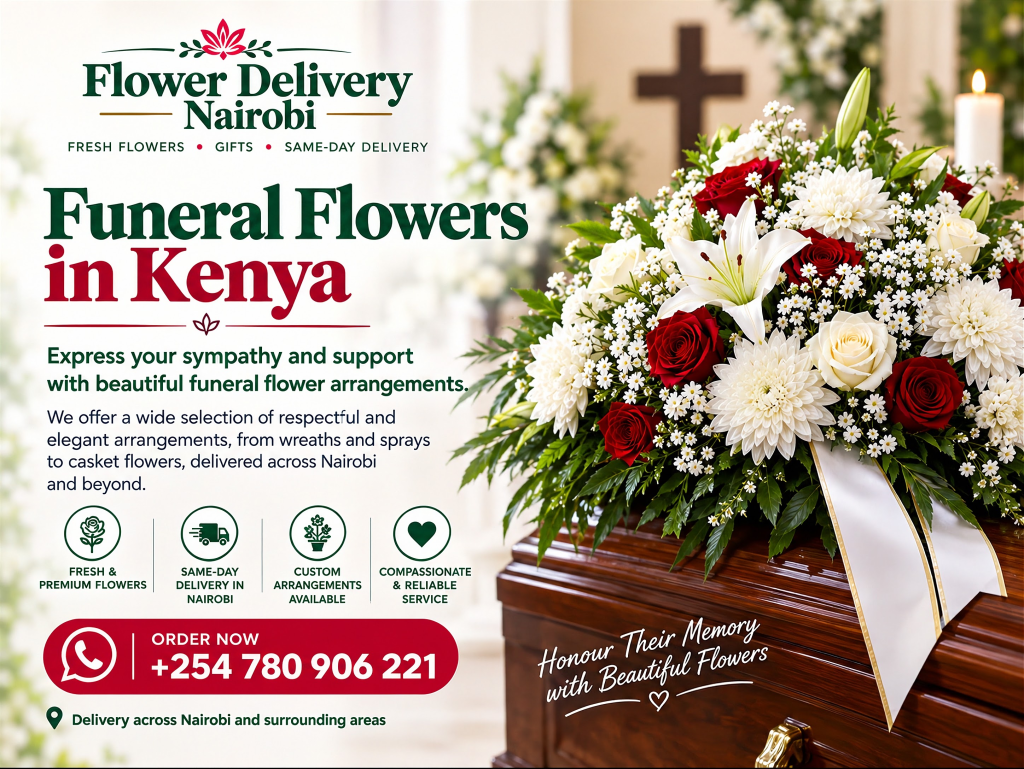
What Flowers to Send for a Funeral in Kenya: The Definitive Guide to Etiquette, Cultural Traditions, and Floral Choices
Losing a loved one is one of life’s most profoundly challenging experiences. During moments of intense grief, finding the right words to comfort a mourning family can feel nearly impossible. Across the globe, and significantly within modern Kenyan society, flowers have stepped into this linguistic void. They serve as a visually poignant, deeply comforting, and silent testament to love, respect, and shared sorrow.
In Kenya, the tradition of sending funeral flowers, wreaths, and sympathy arrangements has evolved into a vital aspect of bereavement customs—particularly within urban centers like Nairobi, Mombasa, Kisumu, Nakuru, and Eldoret, as well as throughout many rural communities. However, because Kenya is a beautiful mosaic of diverse cultures, distinct religious faiths, and deeply rooted traditions, sending funeral flowers is not a one-size-fits-all gesture. Navigating the delicate nuances of floral etiquette is essential to ensure that your token of condolence brings genuine comfort rather than accidental confusion or cultural offense.
This comprehensive, highly detailed guide is designed to walk you through every aspect of choosing and sending funeral flowers in Kenya. From understanding tribal and religious dynamics to selecting the mathematically and symbolically perfect arrangement, writing the right message, and navigating local logistics, this article ensures your tribute is flawlessly executed.
1. The Cultural and Religious Tapestry of Funeral Flowers in Kenya
To truly appreciate the etiquette of sending funeral flowers in Kenya, one must first look at the country’s rich cultural and religious demographic landscape. How flowers are received depends heavily on the religious beliefs and community traditions of the deceased and their family.
Christian Services (Catholic, Anglican, Presbyterian, Evangelical, and AIK)
Christianity is the predominant religion in Kenya, and within these communities, floral tributes are exceptionally well-received and deeply integrated into the funeral timeline.
The Aesthetics of Mourning: In churches such as the Anglican Church of Kenya (ACK), the Presbyterian Church of East Africa (PCEA), and the Roman Catholic Church, flowers form a core part of the liturgical and visual landscape of a funeral. They line the altars, drape the caskets, and carpet the gravesites.
Symbolism of Resurrection: For Christians, flowers—which bloom, wither, and drop seeds for new life—are often viewed as a subtle, beautiful metaphor for the earthly life, death, and the ultimate promise of the resurrection.
The “Viewing” and Memorials: Flowers are prominently displayed during the body-viewing sessions at funeral homes (such as the Lee Funeral Home or Kenyatta National Hospital Funeral Home) and remain with the casket all the way to its final resting place.
Islamic Traditions (Janazah)
If the deceased was a practicing Muslim, the etiquette regarding flowers changes dramatically.
Simplicity and Immediacy: Islamic burials (Janazah) happen as quickly as possible, typically within 24 hours of death. The focus is entirely on simplicity, humility, and intense prayer for the departed soul.
Are Flowers Appreciated? Generally, sending floral wreaths or bouquets to an Islamic funeral or a mosque is not customary and is often discouraged. Islamic tradition emphasizes avoiding extravagance or any practice that could be seen as mimicking non-Islamic mourning customs.
Alternative Gestures of Comfort: Instead of spending money on flowers, the appropriate etiquette is to send your personal condolences directly to the family home, offer prayers (Dua), or provide practical support. Bringing food to the grieving household during the initial days of mourning or making a financial contribution to a charity in honor of the deceased (Sadaqah Jariyah) is considered far more meaningful and culturally aligned.
Traditional Customs and Upcountry (Shaggs) Realities
In Kenya, the phrase “going upcountry” or heading to shaggs carries immense weight when it comes to funerals. Many urban dwellers are laid to rest in their ancestral homes. When a funeral moves from an urban mortuary to a rural village, the practical dynamics of mourning can shift.
Practicality Over Aesthetics: In some traditional rural settings, the immediate community prioritizes tangible, communal support over floral arrangements. The logistics of organizing a rural burial involve feeding hundreds, sometimes thousands, of mourners who come to pay their respects.
The “Mchango” Priority: In these scenarios, financial contributions made through the funeral committee (kamati) via mobile money platforms like M-Pesa are highly prioritized. This money goes directly toward catering, tent hire, transport, and coffin expenses.
The Modern Compromise: It has become increasingly common for corporate entities, close friends, and urban colleagues to travel upcountry with a combination of both: an M-Pesa contribution to ease the financial burden, and a beautiful, professionally curated wreath to lay on the grave as a sign of formal respect.
2. Sympathy Flowers vs. Funeral Flowers: Understanding the Difference
A common point of confusion for many people is the distinction between “sympathy flowers” and “funeral flowers.” Sending the wrong type to the wrong location can disrupt the logistical flow of the family’s mourning process.
Sympathy Flowers
Sympathy flowers are addressed and sent directly to the family of the deceased. They are an expression of personal warmth, comfort, and ongoing support for the living.
Design and Scale: These are typically medium-sized bouquets, elegant table arrangements in glass vases, or beautifully potted plants. They are designed to fit comfortably on a living room table, a kitchen counter, or a windowsill without overwhelming the room.
Where They Go: They are delivered directly to the family residence during the wake, the daily evening prayer meetings, or even a few weeks after the burial when the crowds have left and the silence of grief sets in.
Longevity: Potted plants, such as peace lilies or white orchids, are excellent sympathy gifts because they continue to grow long after the funeral services have concluded, serving as a living memorial.
Funeral Flowers
Funeral flowers are sent as a tribute to the deceased person and are designed to honor their memory at the formal services.
Design and Scale: These are large, formal, and highly structured floral designs. They include circular wreaths, large standing sprays anchored on wooden or metal easels, heart shapes, and massive casket sprays.
Where They Go: They are almost never sent to a private home. Instead, they are delivered directly to the funeral parlor, the church where the requiem mass is being held, or straight to the cemetery/gravesite.
Destination-Bound: They are built to withstand transport over long distances (including rough upcountry roads) and are meant to be displayed publicly during the formal farewell ceremonies.
3. Comprehensive Guide to Floral Meanings: Choosing the Right Blooms
Flowers possess an intricate, historical language of their own. When selecting a floral arrangement for a Kenyan funeral, understanding what each flower denotes helps you tailor a message of specific comfort and respect.
┌──────────────────────────────┐
│ FUNERAL FLOWER SYMBOLISM │
└──────────────┬───────────────┘
│
┌───────────────────────┼───────────────────────┐
▼ ▼ ▼
White Lilies Roses Carnations
───────────────── ───────────────── ─────────────────
• Peace & Purity • Red: Deep Love • White: Innocence
• Soul's Renewal • White: Reverence • Pink: Memory
• Elegant Solace • Yellow: Friendship • Highly Durable
White Lilies (The Universal Symbol of Solace)
Lilies are the quintessential funeral flower across Kenya. When you step into a high-profile memorial service in Nairobi, the air is frequently filled with the rich, soothing fragrance of Stargazer or Casablanca lilies.
The Spiritual Message: Lilies symbolize that the soul of the departed has returned to a peaceful, restored state of innocence. They represent hope, majesty, and transient life.
Visual Impact: Their large, opening petals create striking focal points in large wreaths and casket sprays, offering a sense of pure, elegant solace.
Roses (An Enduring Expression of Love and Dignity)
While roses are widely associated with romantic love on Valentine’s Day, they are immensely powerful elements in Kenyan funeral arrangements. Their meaning changes completely depending on the hue you choose:
White Roses: These are the backbone of Kenyan funeral floristry. They convey ultimate reverence, humility, innocence, and spiritual paths. A wreath composed entirely of white roses speaks of a clean, highly respected life.
Red Roses: These denote deep, unyielding love, grief, and raw emotional attachment. Out of respect for family hierarchies, red roses should generally be reserved for the immediate family (the surviving spouse, children, siblings, or parents of the deceased). It can be seen as an etiquette breach for an acquaintance or distant colleague to send a solid block of red roses.
Pink Roses: These communicate grace, gentleness, appreciation, and gratitude. They are ideal when celebrating the life of a matriarch, a beloved teacher, or a gentle friend who touched many lives.
Yellow Roses: These symbolize strong bonds of friendship, loyalty, and companionship. They are a beautiful addition to a wreath sent by a tight-knit group of university classmates, childhood friends, or long-time coworkers.
Carnations (The Resilient Token of Remembrance)
Carnations are immensely popular among Kenyan florists, and for very practical reasons alongside their symbolic beauty.
The Practical Edge: Carnations are incredibly hardy, resilient, and water-retaining flowers. If a funeral requires a six-hour drive from Nairobi to Western Kenya or the Rift Valley, carnations will arrive looking fresh, crisp, and vibrant, whereas more delicate flowers might wilt under the heat and dust of the journey.
White Carnations: They represent pure love, sweet remembrance, and innocence.
Pink Carnations: In Christian folklore, pink carnations are said to have bloomed from the tears of Mary, making them a profound symbol of a mother’s eternal, undying love. They are frequently requested for the funerals of mothers and grandmothers.
Chrysanthemums (Mums)
In many global cultures, and increasingly in contemporary Kenyan urban setups, chrysanthemums are strictly associated with honor, death, and lamentation.
Structure and Texture: Because they feature dense clusters of small petals, white and yellow chrysanthemums are excellent for creating the thick, lush base padding of circular wreaths and floral pillows.
Symbolic Value: They signify a life fully lived, deep sincerity, and a quiet, respectful grief.
Anthuriums and Orchids (Exotic Celebrations of Life)
For families wishing to celebrate a life of exceptional vibrancy, sophistication, or high standing, exotic blooms are often incorporated.
Anthuriums: With their unique heart-shaped, glossy spathes (often in deep red, white, or green), anthuriums add a modern, structural, and distinctly tropical elegance to contemporary Kenyan funeral designs. They signify deep hospitality and warm-heartedness.
Orchids: White orchids sent as a sympathy plant to a family home denote eternal love, refinement, and a gentle luxury of spirit that endures despite the pain of loss.
4. Types of Funeral Floral Arrangements and Protocols
The structural shape of the floral arrangement you select carries implicit meaning regarding your relationship with the deceased. Choosing the wrong form can inadvertently overstep boundaries or look out of place.
The Casket Spray (Coffin Top Spray)
A casket spray is a large, elongated, diamond-shaped floral arrangement designed to sit directly on top of the coffin lid.
The Strict Protocol: This arrangement is exclusively the domain of the immediate family. The spouse, children, or parents of the deceased are the only ones who commission and select the casket spray.
If you are an outsider, an extended family member, or a corporate representative, never order a casket spray. Doing so inadvertently infringes upon the intimate mourning rights of the closest next of kin.
Circular Wreaths (The Ring of Eternity)
The circular funeral wreath is the most universally appropriate, respectful, and requested arrangement for colleagues, friends, associations, and corporate bodies in Kenya.
The Symbolism: The unbroken circle represents eternity, the continuous cycle of life and death, and the belief that the memory of the deceased will never truly fade from the hearts of those left behind.
Versatility: Wreaths can range in size from modest 12-inch rings to massive, commanding 36-inch displays. They are easy to transport, look stunning when lined up against a church altar, and fit perfectly flat on top of a fresh gravesite mound.
Standing Sprays and Floral Easels
These are one-sided floral arrangements designed to be viewed from the front, securely mounted onto a tall tripod stand made of wood, bamboo, or metal metal wires.
The Purpose: Standing sprays are built for maximum visual impact in large venues. They are highly favored by corporate institutions, government ministries, rotary clubs, and large church groups.
Placement: They are placed prominently at the entrance of the funeral service hall, flanking the sides of the altar, or standing watch at the head and foot of the casket during a public body-viewing session.
Floral Crosses and Hearts
These arrangements are woven into explicit geometric shapes that carry dense symbolic weight.
The Cross: A deeply religious statement reserved for devout Christian families. It highlights the deceased’s faith and their hope in salvation.
The Heart: A profound declaration of love, devotion, and deep comfort. It is usually gifted by close family members, grandchildren, or exceptionally close, lifelong companions.
5. Crafting the Perfect Message for Ribbons and Sympathy Cards
A beautiful floral arrangement is incomplete without a carefully considered message. In Kenya, funeral arrangements usually feature two types of written words: a short, bold phrase printed on a silk ribbon draped across the flowers, and a more intimate, long-form letter inside an accompanying sympathy card.
Appropriate Ribbon Phrases
Ribbon space is physically limited, so the text must be concise, impactful, and clear. It should easily identify who the flowers are from while offering a traditional phrase of farewell.
Rest in Peace (The classic, universally respected choice)
Lala Salama (Swahili for “Sleep in Peace”, carrying a gentle, deeply resonant local warmth)
In Loving Memory of [Name]
Forever in Our Hearts
Till We Meet Again
With Deepest Sympathy — [Your Company/Family Name]
Gone But Not Forgotten
Celebrating a Life Well Lived
Sympathy Card Messages: Striking the Right Balance
When writing the card that accompanies a sympathy bouquet sent to the family home, ensure your tone balances empathy with profound respect. Avoid cliches that minimize grief (such as “Don’t cry, they are in a better place”) and instead focus on validation, support, and shared memories.
From Close Friends or Neighbors:
“Dear [Family Name], we are completely heartbroken to hear about the passing of [Name]. He/She was an incredible light in our neighborhood, and his/her warmth will be missed by us all. We are praying for your strength, peace, and comfort during this difficult time. We are here for you, always.”
From Professional Colleagues or Corporate Teams:
“To the family of [Name], please accept our heartfelt condolences on behalf of the entire team at [Company Name]. [Name] was a deeply valued colleague, an inspiring leader, and a true friend to many in our organization. His/Her legacy of dedication and kindness will continue to inspire us. May God grant your family fortitude during this time of mourning.”
From Church Groups or Fellowship Circles:
“Beloved family, we lift you up in our prayers as you walk through this valley of sorrow. We take comfort knowing that [Name] walked faithfully with the Lord and is now resting safely in His eternal arms. May the peace that surpasses all human understanding guard your hearts and minds.”
6. Logistics, Delivery, and Budget Realities in the Kenyan Floristry Landscape
Navigating the actual purchase and delivery of funeral flowers in Kenya requires solid logistical planning. Traffic congestion in major cities, long upcountry transit distances, and varying price points require an organized approach.
Key Delivery Points in Kenya
When coordinating with your chosen florist, you must provide precise operational details regarding where the flowers need to be at specific times.
The Funeral Parlor / Mortuary: In Nairobi, locations like the Lee Funeral Home, Montezuma Monalisa Funeral Home, Umash Funeral Home, and Chiromo Mortuary are primary hubs. Florists frequently deliver wreaths straight to these locations early in the morning, just as the family arrives to collect the body for the funeral procession.
The Requiem Mass Venue: This could be a prominent church or a community hall. Ensuring the flowers arrive at least one hour before the service starts allows the church coordinators to arrange them beautifully around the altar before the congregation fills the pews.
The Gravesite / Rural Home: If the burial is occurring outside major towns, you must confirm if your florist offers secure transport networks or specialized packaging that keeps the flowers hydrated during long, hot road trips.
Budget Guide: What to Expect
The cost of funeral flowers in Kenya varies widely based on the types of blooms used (local vs. imported), the size of the arrangement, and the complexity of the design layout.
| Arrangement Style | Typical Price Range (KES) | Best Suited For | Common Flower Selection |
| Standard Sympathy Bouquet | KES 4,500 – KES 8,000 | Family Home Delivery | Local Carnations, Spray Roses, Greenery |
| Medium Circular Wreath (18″) | KES 6,500 – KES 12,000 | Colleagues, Friends, Small Businesses | Chrysanthemums, White Roses, Lilies |
| Large Premium Wreath (24″ – 30″) | KES 15,000 – KES 25,000 | Corporate Bodies, Extended Family | Imported White Roses, Casablancas, Anthuriums |
| Standing Spray / Formal Easel | KES 18,000 – KES 35,000 | Institutions, Large Organizations | Structural Lilies, Delphiniums, Premium Roses |
| Full Casket Spray | KES 25,000 – KES 50,000+ | Immediate Family Only | High-end Exotic Lilies, White Orchids, Red Roses |
Practical Tips for a Smooth Process
Avoid Last-Minute Orders: Floral artists require time to carefully bind stems, construct oasis foam bases, and print professional silk ribbons. Try to place your funeral orders at least 24 to 48 hours in advance.
Confirm the Family’s Wishes: Always check the newspaper obituary notices, virtual funeral flyers, or WhatsApp coordination groups for phrases like “In lieu of flowers, donations can be made to…” If the family explicitly requests financial support over flowers, respect their wishes.
Account for Upcountry Weather: If the flowers are traveling to regions experiencing high heat, opt heavily for carnations, chrysanthemums, and robust tropical foliage rather than delicate imported roses or hydrangeas, ensuring your tribute looks pristine at the moment of interment.
Summary Checklist for Sending Funeral Flowers in Kenya
To ensure your gesture is flawless, run through this quick checklist before finalizing your order:
Confirmed Faith/Culture: Have I confirmed that the family’s religious and cultural beliefs welcome floral tributes (e.g., Christian/Secular vs. Islamic)?
Correct Type of Arrangement: Am I ordering the right piece based on my relationship? (Wreath/Spray for friends and corporates; Sympathy bouquet for the home; No Casket spray unless I am immediate family).
Appropriate Flower Choice: Do the colors reflect the correct sentiments? (White for peace/reverence; pink for remembrance; yellow for friendship; red limited to closest kin).
Proofread Message: Is the ribbon message clear, concise, and spelled correctly? Does the sympathy card clearly state who the gift is from?
Precise Logistical Details: Have I provided the florist with the exact time, date, contact person, and location (funeral home, church, or village landmark)?
By taking the time to understand the cultural significance, symbolic meanings, and social protocols surrounding funeral flowers in Kenya, you transform a simple floral purchase into an eloquent, deeply comforting act of love and solidarity that will be remembered and appreciated by the grieving family for years to come.